- Frontera by Bando
- Posts
- 🇲🇽 Stellar House CDMX: Mexico Is Not Waiting for Permission
🇲🇽 Stellar House CDMX: Mexico Is Not Waiting for Permission
The builders rewiring Latin America's financial stack just showed their cards

Frontera Bando
April 24, 2026
Real problems. Real solutions. Real data. This is Frontera.
Your weekly dose of data-driven crypto insights from the edges of the world. Trusted by leaders at Bitso, Binance, the Solana Foundation, the Ethereum Foundation, and more.
This is where you start if you're building, investing, or scaling in frontier markets.
📸 The Big Picture
This week, the Stellar Development Foundation took over a venue in Mexico City for Stellar House CDMX, a two full-day, invite-only event that brought together the people actually moving money across Latin America's most important financial corridor.
Not a conference about what could happen. A room full of founders, regulators, and institutional operators showing what already is.
Mexico moves over $60 billion a year in remittances. Stablecoins already process roughly 10% of the Mexico-US corridor. The fintech ecosystem has produced world-class companies like Bitso, Clip, Konfio, Plata, Stori and Banxico moved early with SPEI, one of the first real-time payment systems anywhere, followed by CoDi, DiMo, and the digital peso pilot.
The thesis behind Stellar House was simple: the gap between the financial system Mexico has and the one it deserves is closing fast. And the people closing it were in that room.
Every session told a different chapter of the same story. Here's what stood out.
🇲🇽 Daniel Vogel on Bitso's Next Act
Denelle Dixon, CEO of the Stellar Development Foundation, opened the day with a clear message: Mexico isn't a market to watch, it's the place where the future of financial infrastructure is being built right now.
Then came the first fireside: Daniel Vogel, Co-Founder and CEO of Bitso, sat down with Denelle to unpack how the company's mission of "making crypto useful" has evolved across Mexico, Argentina, Brazil, and Colombia.
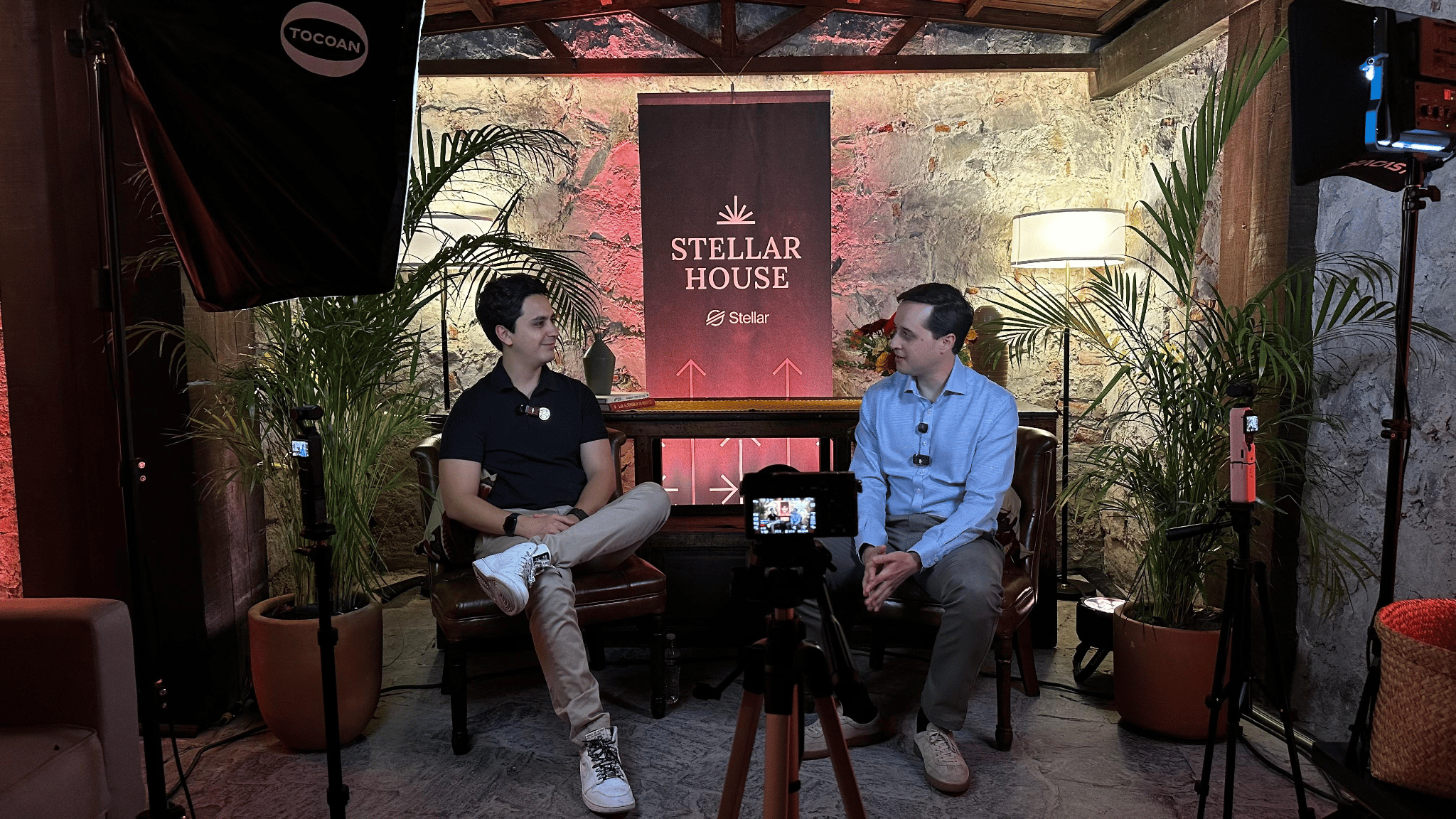
Vogel addressed what it takes to operate across multiple LATAM jurisdictions, the regulatory clarity still missing for the next step-function in adoption, and where MXNB, Bitso's local-currency stablecoins, go from here.
The most interesting tension was that Stripe, PayPal, and major banks are all moving into stablecoins now. Does that validate the thesis or threaten the business? Vogel's answer amounted to this, the big players entering the space proves the market is real, but the competitive edge belongs to whoever understands the local corridors best. Bitso has spent years building that understanding.
For the builders in the room, his advice was characteristically direct: the things you have to learn the hard way are the things no one can tell you in advance. The playbook doesn't exist yet, you write it by shipping.
🚞 The New Rails: Payment Infrastructure Gets Rebuilt
Panel 1 brought together three infrastructure builders who are quietly rewiring how money moves across borders, currencies, and rails: Juan Diego Oliva (CEO, Capa), Diego Yanez (CEO, Alfred), and Felipe Gedon (CRO & Co-founder, Cobre). Moderated by Jose Fernandez da Ponte, President and Chief Growth Officer at SDF.
We learned that Mexico's financial transformation is happening underneath the app layer. These are the companies making the next generation of financial products possible.
Alfred just closed a $15M Series A led by F-Prime Capital, Brevan Howard Digital, and White Star Capital to scale cross-border payments across LATAM. Diego broke down what's still painfully slow when a bank or fintech wants to move money cross-border and how Alfred solves it at the settlement layer.
Cobre handles custody and settlement for institutions. Felipe laid out how institutional clients in Mexico are asking for fundamentally different things than they were two years ago, the conversation has shifted from "should we explore crypto" to "how fast can we integrate stablecoin rails."
Capa's Juan Diego Oliva brought a perspective the Mexican market isn't paying enough attention to: the Caribbean and Central American payment corridors.
🧐 BIVA: What It Takes to Break a 25-Year Monopoly
Maria Ariza, CEO of BIVA (Mexico's second stock exchange), sat down with Denelle for a fireside on disruption, trust-building, and what actually moved the needle in Mexico's financial evolution over the last decade.
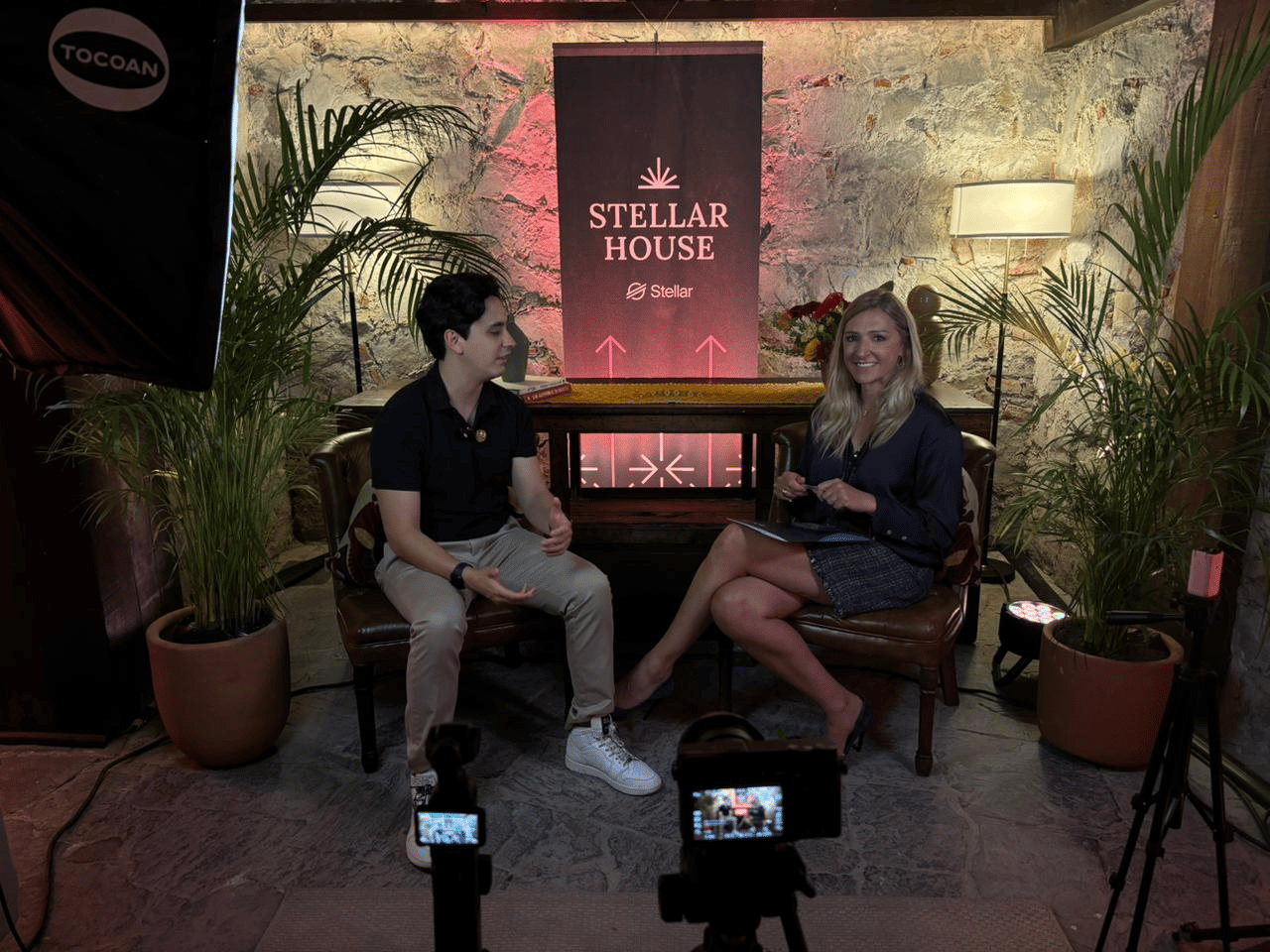
BIVA launched into a market with a 25-year monopoly. Ariza was refreshingly honest about the odds they gave themselves and what encouraged the team to do it anyway. Getting to second place in an exchange market is about trust, not necessarily technology or capital.
On tokenization and blockchain as the next layer of market infrastructure, Ariza gave a nuanced read from someone who's built exchange infrastructure from scratch: some of it is real, some of it is still hype.
📚 Building the Rules for What's Next
The regulatory panel brought together Luis Urrutia (General Counsel, Bitso), Juan Antonio Martin (Partner, White and Case), and Lorenza Martinez (Senior Financial Sector Executive & Board Advisor), moderated by Bruno Batavia from Valor Capital.
Mexico has been a leader in financial services regulation, the Fintech Law, the sandbox framework, SPEI long before most markets had anything comparable. The GENIUS Act in the US showed that regulatory clarity is a prerequisite for institutions to move.
The question on the table was: what would it take to use Mexico's regulatory foundation to accelerate institutional adoption and simultaneously foster the developer ecosystem that keeps building here?
The panel didn't shy away from the tension between innovation speed and regulatory clarity. Mexico has both the track record and the opportunity, the question is execution.
💸 The Future of Money in LATAM: Last Mile, First Priority
Panel 2 was about the people most of fintech still ignores: the unbanked, the underserved, the woman in Oaxaca who receives remittances but doesn't have a bank account.
Fernanda Orduna Rangel (Co-founder, Decaf Wallet), Alonso Garcia (Head of Finance, Felix), and Carlos Neira (Co-Founder, Meru) sat down with Nick Gilbert, VP of Product at SDF.
Felix has processed over $1 billion in remittances and settles via WhatsApp. Not a standalone app, WhatsApp. Alonso explained what they understood about the user that others missed: when your family depends on $200 arriving safely, you're not downloading a new app. You're using the thing you already trust.
Decaf is building a wallet for people who've probably never heard the word "blockchain." The technology has to be completely invisible. Fernanda's design philosophy is radical in its simplicity: if the user can tell they're on a blockchain, you've already failed.
Meru connects payment corridors in Central America and the Caribbean, targeting the most underserved corridors in the region, the ones where traditional intermediaries still charge 5-7% to move money while these companies do it for less than 1%.
The group discussion surfaced a key insight: every panelist was surprised by something about their users' behavior once they started operating. The assumptions you bring from traditional fintech don't survive contact with the unbanked. Building trust with someone who's never used a digital wallet and whose family depends on that money, requires a fundamentally different approach.
The question everyone wanted answered: LATAM has seen waves of fintech hype before. What makes this moment different? The answer, across all three panelists, came down to one thing this time, there's real volume. Not pilot programs. Not proof of concepts. Billions of dollars moving through these rails right now.
🌎 Beyond USD: The Local Stablecoin Thesis
The final panel before the closing AMA was the one that hit closest to home. Dave Taylor (Co-Founder & CEO, Etherfuse), Ruben Galindo Steckel (Co-Founder & CEO, Airtm), moderated by Abraham Cobos Ramirez (CEO & Founder, Bando).
The thesis: digital finance is working in Mexico in pesos, at scale, right now. And a locally-rooted financial stack may be the most important development in Mexican fintech in a generation.
Etherfuse has been building something we've covered extensively in Frontera: tokenized CETES via Stablebonds. Mexican government bonds, on-chain, accessible to anyone. Tomer Weller himself called out Etherfuse during his privacy session, noting that "the stable bond being that frictionless piece the conversion between the US dollar-backed asset and the local currency" is exactly the kind of use case that makes local stablecoins matter.
The numbers tell the story. At one point, Stellar had roughly 40 local stablecoins on the network. They were early, the infrastructure and distribution pathways weren't there yet. Now they are. And the market is swinging back hard into local stables.
Bando, that's us, moderated this panel because we sit at the intersection: treasury management, stablecoin infrastructure, and the bridge between on-chain yield and real-world financial products. The conversation with Dave and Ruben was about what happens when you stop thinking of stablecoins as just a USD proxy and start building a locally-denominated financial stack that serves the actual needs of Mexican businesses and consumers.
It's not as simple as just cashing out into fiat. As Tomer put it: "You need to consider what's going to happen on the edge when you're cashing out, and it's never as simple as just cashing out into fiat." Local stablecoins solve for that edge. They're the bridge between the on-chain world and the peso-denominated reality that 130 million Mexicans actually live in.
🔮 The Closing: What's Next for Stellar
Denelle Dixon, Jose Fernandez da Ponte, and Tomer Weller closed the day with an open AMA moderated by Jason Karsh, Stellar's CMO.
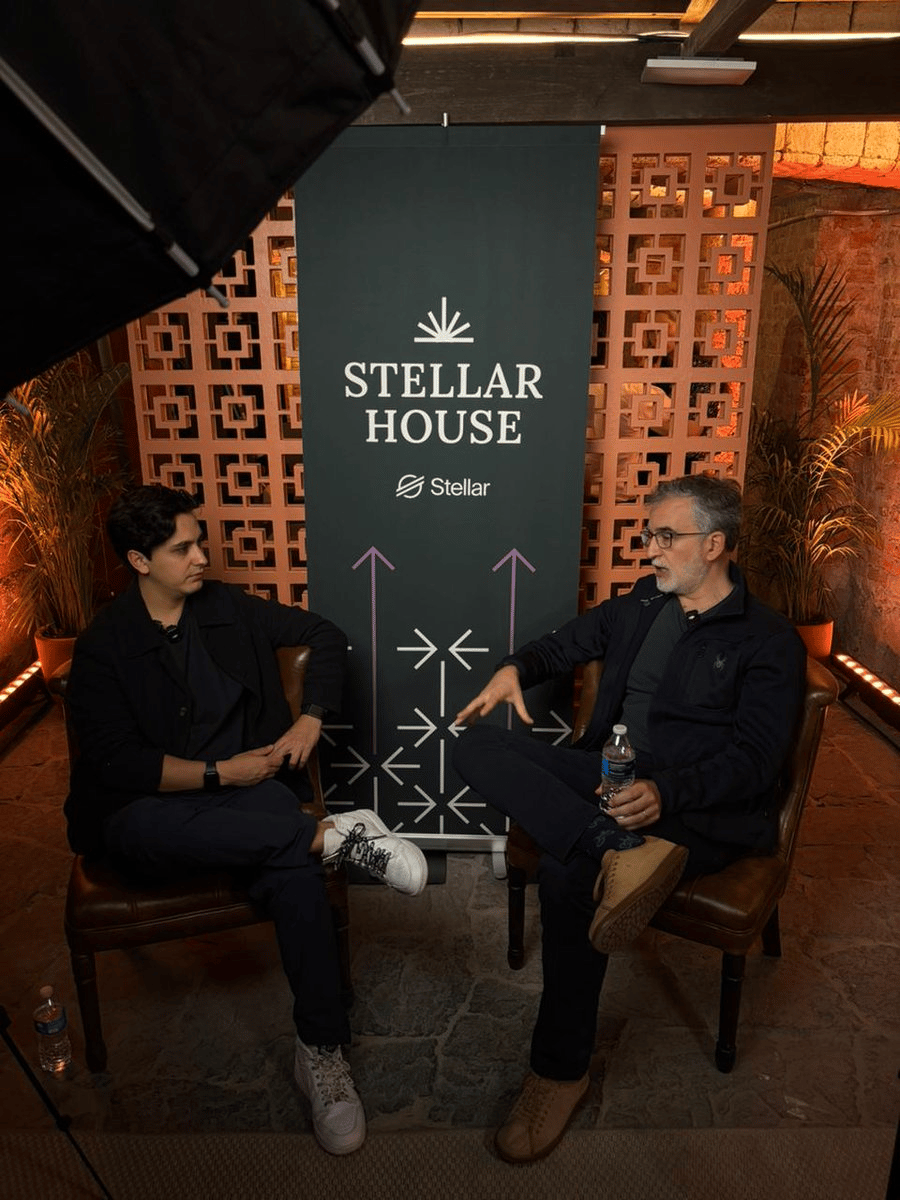
The message was consistent across every session: Stellar isn't just a network for cross-border payments anymore. With the X-Ray upgrade, configurable privacy, Soroban smart contracts, and a growing ecosystem of builders across LATAM, Stellar is positioning itself as the institutional-grade infrastructure layer for the next phase of financial inclusion.
The builders in Mexico City didn't need convincing. They're already shipping.
🎬 Our Take
Stellar House CDMX was a progress report.
The companies on stage, Bitso, Etherfuse, Bando, Decaf, Felix, Meru, Alfred, Capa, Cobre, Airtm, BIVA, aren't pitching what crypto could do someday. They're showing transaction volumes, corridor data, and institutional partnerships that are already live.
Three things stood out:
Privacy is the unlock. The Tomer-Denelle session made it clear: institutional adoption at scale requires configurable privacy. Stellar's approach, privacy at the application layer, transparency at the base layer is the most pragmatic framework we've seen. The X-Ray upgrade and the flood of privacy tooling (Nethermind, OpenZeppelin, Boundless) suggest this is happening in 2026, not "eventually."
Local stablecoins are the endgame. USD-denominated stablecoins got the market started. But the real opportunity, and the real utility for the 600M+ people in LATAM, is local-currency stablecoins that plug into existing financial behavior. Etherfuse's tokenized CETES, Bitso's MXNB, and the infrastructure Bando is building to connect them all are the early chapters of that story.
Mexico is the proving ground. Not Singapore. Not Dubai. Not London. Mexico with its $60B remittance corridor, its progressive Fintech Law, its world-class homegrown talent, and its proximity to the US market, is where the thesis gets proven or disproven. Every company at Stellar House understood that.
The gap between the financial system people have and the one they deserve is closing. The people closing it were in that room.
Until next time, keep building.