- Frontera by Bando
- Posts
- 🇮🇷 Iran Is Charging What to Cross the Strait of Hormuz!?
🇮🇷 Iran Is Charging What to Cross the Strait of Hormuz!?
Bitcoin. Yes, they're charging Bitcoin.


Frontera Bando & Joker
April 10, 2026
Real problems. Real solutions. Real data. This is Frontera.
Your weekly dose of data-driven crypto insights from the edges of the world. Trusted by leaders at Stripe, Paradigm, Binance, the Ethereum Foundation, and more.
This is where you start if you’re building, investing, or scaling in frontier markets.
This Edition Is Brought To You By Minteo

Minteo provides the infrastructure businesses use to manage balances, move money, and earn yield on stablecoins. Discover how at minteo.com.
🇮🇷 Iran Is Charging What to Cross the Strait of Hormuz!?
Following the two-week ceasefire announced by President Trump on April 7, Iran began reopening the Strait of Hormuz under a controlled toll system that has turned the world's most critical oil chokepoint into a crypto-powered tollbooth.
The narrow channel where roughly 20% of the world's oil and LNG normally passes is now pay-to-transit, and supposedly Iran wants the fees settled in Bitcoin. You read that right.
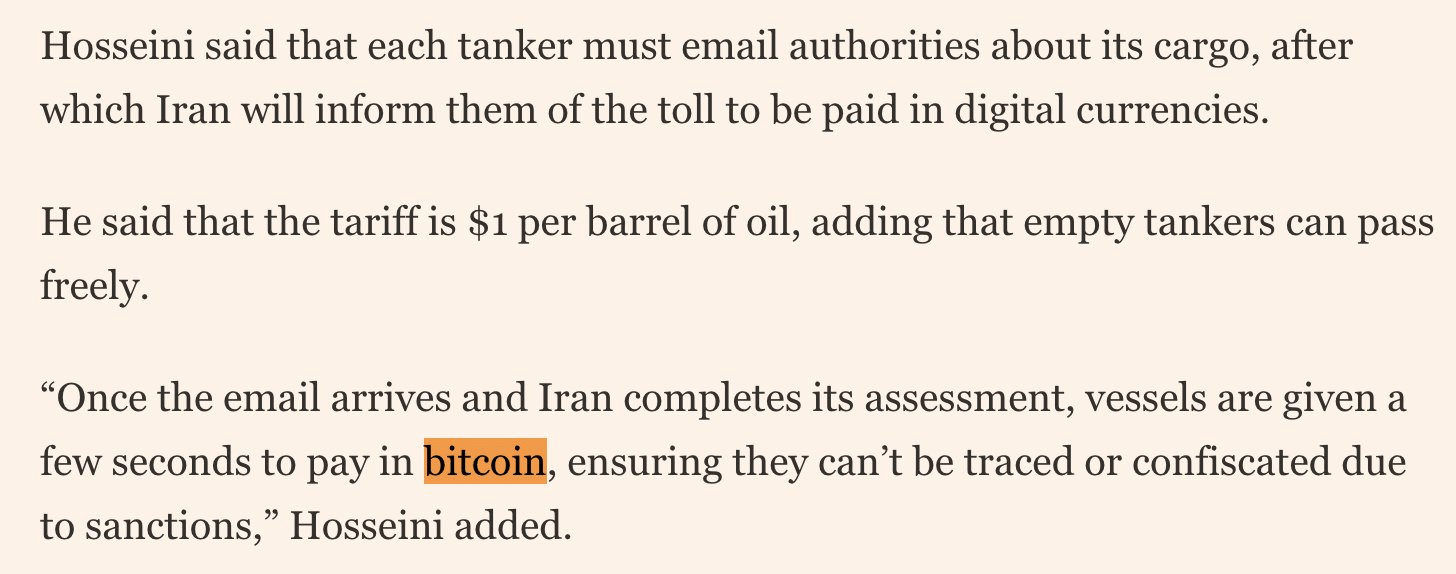
Hamid Hosseini, spokesperson for Iran's Oil, Gas and Petrochemical Products Exporters' Union, told the Financial Times that tankers must email Iranian authorities with cargo details, undergo an IRGC screening process against a five-tier nation friendliness ranking, and settle a toll of $1 per barrel of oil onboard.
So a loaded VLCC carrying 2 million barrels pays roughly $2M per transit, and empty tankers pass free.
The IRGC's comfort with crypto payments tracks with a well-documented history. Chainalysis's head of national security intelligence, Andrew Fierman, told CoinDesk the move was "highly unsurprising," pointing to an extensive network of IRGC-affiliated wallets that received over $3B in 2025 alone to facilitate cross-border oil trade.
TRM Labs confirmed the toll system has operated since mid-March, with a dedicated exchange window on Qeshm Island converting crypto receipts into rials. The toll system is the formalization of an infrastructure that's been running for years, not a sudden experiment as many may have thought. And they are choosing Bitcoin for a reason.
That said…
Hosseini is the only named source to specifically mention BTC, and no on-chain evidence of Bitcoin toll payments has been publicly produced by any analytics firm as of April 9.
The strait itself also remains effectively closed despite the ceasefire. Pre-war traffic averaged 100-150 ships per day, while post-ceasefire data from MarineTraffic and S&P Global shows only 4 daily transits and an established 12 a day limit, with roughly 3,200 vessels and 20,000 seafarers still stranded.
BTC surged from $68K to $72.7K on the ceasefire news, though the move was primarily attributed to the truce rather than the crypto toll headlines specifically.
And still, the situation remains far from resolved. On Thursday, Trump posted on Truth Social that Iran “better stop” charging fees to tankers, warning them directly after reports surfaced of the toll system operating during the ceasefire he brokered just 48 hours earlier.
When you zoom out from the political theater, you have to ask the question:
Why Bitcoin?
Iran is sanctioned out of the dollar system. SWIFT is off the table. Stablecoins like USDT and USDC have freeze functions baked into the smart contracts, and Tether has already frozen millions in Iran-linked wallets. Yuan works but ties Tehran to Beijing.
Bitcoin is the only settlement layer on earth that no government, company, or coalition can censor mid-transaction.
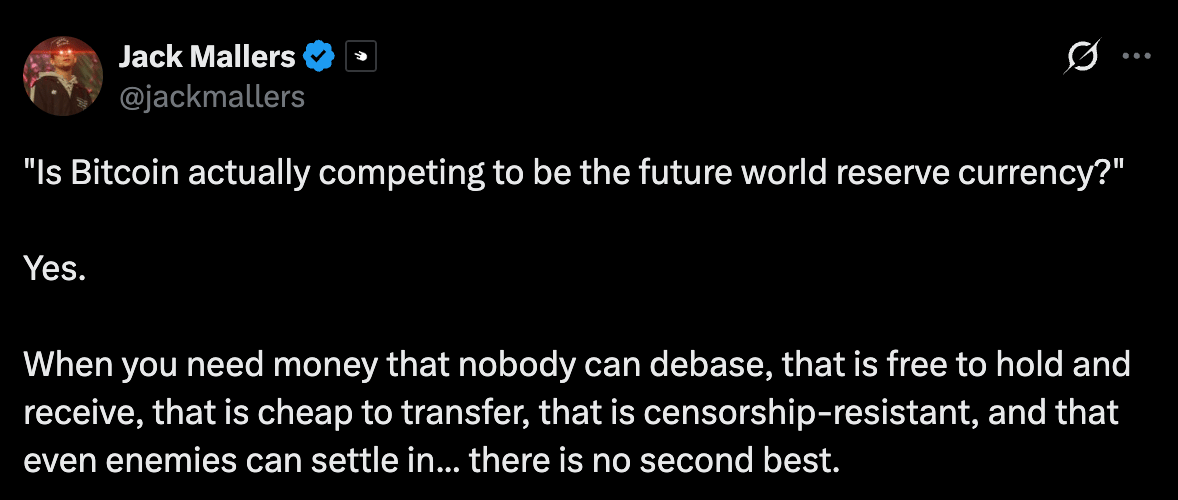
There is no second best.
🪙 Stablecoins
Polygon is in early talks to raise $50–$100M in equity for a new stablecoin payments business led by CEO Marc Boiron, building on its $250M acquisitions of Coinme and Sequence earlier this year.
Chainalysis projects adjusted stablecoin volume reaching $719T by 2035 through organic growth alone, and up to $1.5 quadrillion factoring in generational wealth transfer and merchant adoption, surpassing global cross-border payments.
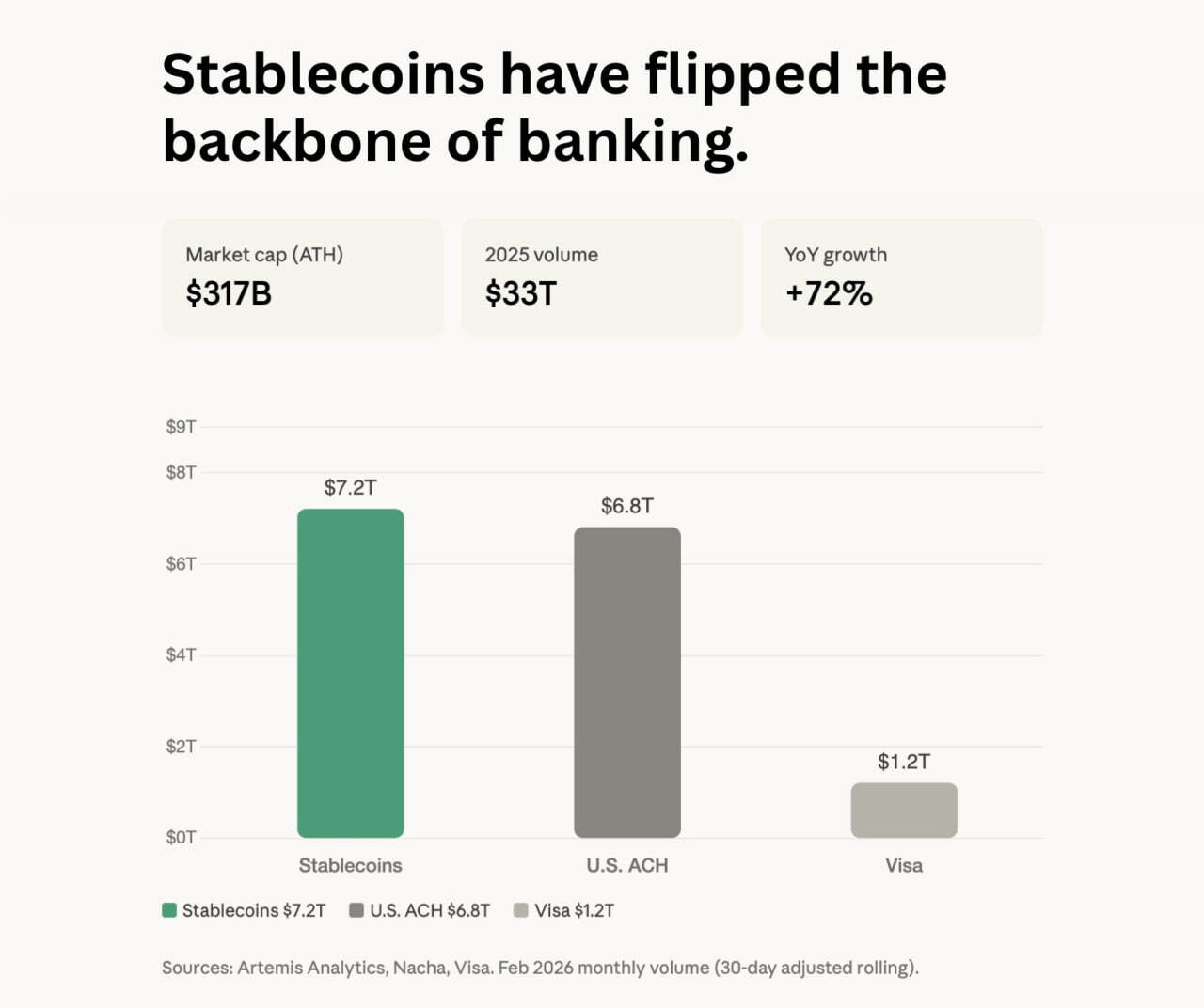
Monthly stablecoin transaction volume reached $7.2T in March, surpassing both U.S. ACH transfers and Visa’s combined monthly volume for the first time.
Stablecoin supply on Ethereum reached an all-time high of $180B, up 150% in three years, with the network holding 60% market share as Token Terminal projects $1.7T in stablecoin inflows (not volume) across all chains by 2030.
🇫🇷 France
A new French legislative amendment will require holders of self-custodied wallets exceeding €5,000 to declare them to tax authorities, extending oversight beyond exchanges amid a wave of violent crypto-related kidnappings in the country.
🇦🇺 Australia
Coinbase became the first crypto exchange to receive an AFSL directly from ASIC, with plans to offer crypto and equity perpetuals, futures, options, and payments to Australian investors.
🇺🇸 United States
Treasury Secretary Scott Bessent published a WSJ op-ed calling the Clarity Act a national security priority, warning the U.S. risks losing crypto leadership to Abu Dhabi and Singapore if comprehensive market structure rules aren’t passed immediately.